Showing posts with label cinema. Show all posts

Tuesday, February 2, 2010

Oscars and cinemas in need

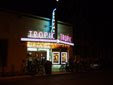
Tropic - Key West

As the nominations for the 82nd Academy Awards are announced it’s no surprise that Avatar has made its presence known. Does its success at both box office and award nominations prove that 3D is here to stay? Or merely that Mr Cameron knows a thing or two about creating best selling features?

In terms of 3D, its presence is starting to be felt outside of the multiplex experience as Sky announces it will launch this format in pubs soon. More here. And if you have ever wondered how regular films are converted into 3D, here’s all you to know.

The story that caught my eye this week is that UK supermarket giant Tescos are venturing into the world of film production - how things are changing in production as well as distribution and exhibition. It’s a move that I find both inspirational and appalling in the same breath.

On a much sadder note, comes the news that many beautiful old cinemas are under threat. These grand old ladies of Art Deco are incredible, historically important buildings that need long sighted planning and care, not short sighted demolition. It was a fight to keep Miami’s incredible Art Deco and where would South Beach be without it? Councils are merely thinking quick profits and easy solutions and in the process quietly, but definitely, destroying an important part of our social heritage. If they were castles where kings had slept, those that rule might think differently. But these are the palaces of the people where dreams are born, romances blossom and personal histories forged. Shame on those who let this be reduced to rubble.

Sunday, October 4, 2009

On there other side of the screen, it all looks so easy

Recognise the quote anyone? Of course you do – a classic line from a 1982 classic film Tron. The news this week that Disney has revealed a 3D sequel kind of made me feel old. Jeff Bridges has been inside that computer for a quarter of a century!

Cinema news this week includes the smallest and one of the oldest. The world’s smallest cinema has just been unveiled. Check out this converted rickshaw for the tiniest big screen experience going. And the good news for many cinema lovers in Scotland is that Historic Scotland has announced that the former Odeon in Edinburgh’s southside is to be saved. In a city that is already over screened it’s going to be a tall order making a restored version of its amazing auditorium profitable. But the hope coalition is high for this grand old lady of the city's cinemas.

Thursday, May 28, 2009

RIP Glasgow's Coliseum


Some sad news from Scotland. Glasgow’s former Coliseum which opened in 1905 (originally as a music hall), screened Glasgow’s first talking picture in January 1929, was Scotland’s only Cinerama whose opening was covered by British Pathe News and closed as a cinema in 1980, suffered a very bad fire in the early morning of 25 May. The damage to the building was so bad that demolition work is underway.

In finding out more about this fire I had a skim through the Scottish Cinemas and Theatres Project’s website and browsing through the long list of cinemas at risk and demolished cinemas in Scotland was a sobering read. This prompted me to feel even more anxious for those cinemas who can’t afford digital and could be facing the same fate as so many of the cinemas listed on this website.

The bright side of this blog is the undeniable shift in attitude about digital by many independent cinemas in the UK who are now finally getting to grips with this format’s benefits and possibilities. But the shadow of the hefty price tag simply won’t go away.

Can Virtual Print Fees (VPF) deals and extra revenue from alternative content save the day? Well many UK independents can’t consider 3D as they are too close to a multiplex that already offers, or plans to offer, this content. And do many independent venues want to develop the 15 – 24 year old audience that most 3D films seem to be aimed at?  Of course live opera, theatre and sporting events can make a difference – I’m eagerly awaiting the Tour de France in 3D – but even if this can generate an extra £5,500 per screen per year, where does the initial capitol outlay come from?

As for VPF deals... to me, and many others, they simply reinforce the old model of domination by the major studios and completely smother the flexibility, independence and creative potential of digital. And they could ultimately be all talk and small print.

Since starting this blog Jim Huskey, Outside Sales Manager for Sonic Equipment Company in the US has got in touch. He’s working to encourage independents in the US to seize the day and act now with digital and in doing so embrace the bottom up way of working this format allows. To quote: “The day is arriving where studio content is not the only game in town…. theatres must begin thinking laterally. The seats, screen, sound system, and concessions are already in place. The heating and A/C are keeping the environment comfortable. The restrooms are clean. But without digital equipment, morning seminars, educational programs, or other content is not an option. Without digital, LAN parties lasting from the last showing until noon the next day are not in the mix. Exhibitors need to walk into their houses during off times and ask themselves, "how can I get more mileage from this facility NOW?"

I also like this from Jim: “Independents have to be creative and also must forge a relationship with their markets. Some donate free passes to be given away by disc jockeys - in return for on air recognition. Some deal directly with area schools to build interest through marketing campaigns. One manager shared with me how she got involved with the humane society, dyed a white cat pink, went out to area schools. She raised money and publicity for the humane society and packed her house for the pink panther movie”.

This is the glass half full attitude towards digital. The ‘We Think’ of digital cinema that I blogged about earlier. Don’t get me wrong, I’m sad to see the old cinemas derelict. The image that accompanies this blog is of the old Odeon cinema on Clerk Street, Edinburgh, an old art deco purpose built cinema that the Cinema Theatres Association have described as "the best surviving example of architecture of its time in the UK". Catch the story from the BBC here.

Now I’m as much in love with the golden era of cinema that this building embodies as the next person. And I hate to see these fabulous old buildings derelict, under threat and falling apart. But I know that they can never be what they were and that cinema as an industry has moved on. Digital is forcing us all to move again in a big way and perhaps this leap to the future can save some of old relics from the past. As we move from deco to digital perhaps creative thinking around this new format can breath new life and potential into the countless old cinemas whose dark auditoriums are currently filled with nothing but dust and memories. If it doesn’t, there are going to be a whole lot more demolition of old cinemas in Scotland and beyond.

Sunday, May 10, 2009

I’m thinking digitally

So, I am feeling differently about digital after the Cinema Exhibitors Association roadshow last week. Not least of which in how independents might afford the switch and keep some options open around alternative content and Virtual Print Fee deals. Even if it does mean that working with VPF prevents the full potential of digital being unlocked.

The other reason I’m feeling so positive about digital is that I feel confident cinema will survive despite the changes brought to our lives by the wider world of digital development and web 2.0. Let’s face it, cinema has reinvented itself many times already, did anyone ever expect it wouldn’t in the digital age? And this time the possibilities open to those exhibitors who recognise the full potential of digital are far greater than those offered by any of cinema’s other incarnations.

I came across this online interview with John Knell from the Intelligence Agency chatting to Bill Thompson the other day – in which Knell makes the (tongue in cheek) suggestion that all cinemas should be operating with a sense of impending extinction.

My grandmother was a cinema usherette in Coventry during the war. From an early age I was feed stories about GIs, gas lit auditoriums, nicotine stained cinema screens, mothers who let their children pee on the floor as they didn’t want to take them to the toilet and miss the film and the times they ignored the air raid sirens to stay in the cinema as the bombs that destroyed the city fell all around them. The cinema she knew was different to the one I grew up with – the worn out, divided up auditoriums of the late 70s and early 80s. Pressed up against bingo halls and British Legion social clubs with minimal sound proofing, smokers on one side, intermissions and usherettes with ice cream trays around their necks.

And these faded cinemas, where those of us who are old enough remember the first time Star Wars revitalised their tired screens, are different again from the modern multiplexes that screened the digitally shot Attack of the Clones with glorious Dolby surround sound.

All of these lives are a world away from cinema’s first silent incarnation where people flocked to see the news as well as films. So Knell is right when he claims that cinemas should be operating with an impending sense of extinction, but then they always have. Cinema has become extinct many times and digital is just another reincarnation – if anything one that harks back to cinema's roots and allows ‘alternative content’ to be screened alongside films.

All that’s ever stayed the same in cinema, and ever will, is a dark auditorium, a big screen, a magic lantern and a deep seated desire to momentarily escape from the real world.